


Teaching for the planet and empowering student-Led climate action in schools.

Written by Abigail Chifusa, GSP Project Officer.
On the occasion of Earth Day 2026, under the theme “Our Power, Our Planet,” the role of education in advancing sustainable development remains very important. The Global Schools Program (GSP) continues to support educators in integrating Education for Sustainable Development (ESD) into classrooms, empowering learners to contribute meaningfully to the Sustainable Development Goals (SDGs).
Across the world, student-led climate action is gaining huge momentum. Millions of young people have taken part in initiatives such as Fridays for Future, which has mobilized students in over 150 countries, while UNESCO reports that more than 70% of young people globally say they are already taking action to address climate change in their daily lives. In schools, student-led environmental clubs, sustainability projects, and youth advocacy campaigns are becoming increasingly common, demonstrating that learners everywhere are stepping into leadership roles and driving change within their communities.
Within this global effort, Gilson Tembo, a Global Schools Program advocate alumnus and teacher at Arakan Girls Secondary School in Lusaka, Zambia, demonstrates how educators can translate international commitments into practical, student-led climate action within schools. His work shows how ESD can become a lived experience for learners, shaping their mindset and actions.
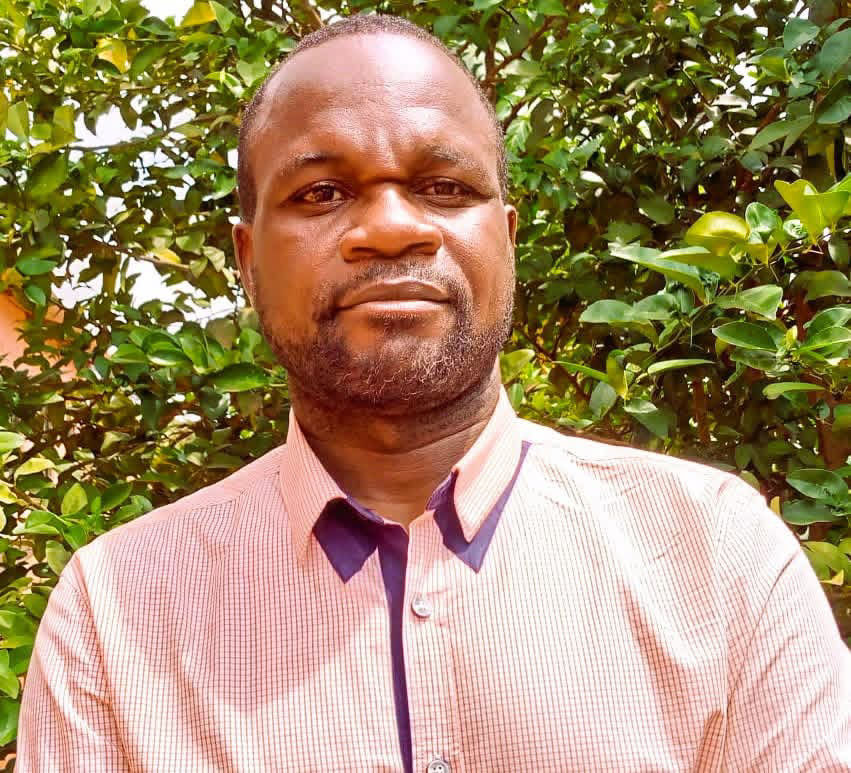
Gilson’s journey started in the year 2022 during a lesson with his learners.
“The moment came in 2022, during a lesson on climate change, I asked my grade 10 learners: ‘What can you do about the droughts we are experiencing?’ A girl raised her hand and said, ‘Nothing, teacher. We are just children.’ That kind of thinking broke my heart,” he explained.
Gilson said that the learner's response pushed him to rethink his approach to teaching.
“I realized that my teaching was giving them knowledge but not urgency,” he said.
Inspired by his training in ESD through the Global Schools Program, Gilson started the GreenTeenZ Environmental Conservation and Sustainability Club, an initiative that now reaches over 200 students across six schools in Zambia.


At Arakan Girls Secondary School, global goals such as SDG 13 (Climate Action) and SDG 15 (Life on Land) have been translated into daily practice.
“I tell my students that the SDGs are not for presidents and ministers alone. They are for you too,” Gilson said.
He explained that after a few lessons, his students started to switch off lights in their classrooms, avoiding single-use plastics, and planted trees around the school yard. In the school garden, they also compost waste, conserve water, and study insects.
“Small actions, done consistently, become habits. Habits become a lifestyle. That is how global goals become local realities,” Gilson said.
The impact on his learners has been meaningful and life changing. Gilson proudly shared some of their stories. “Take Joy Mulenga, for example. When she first joined GreenTeenZ, she could barely look me in the eye. Today, she is a confident university student studying animal science.”
At university, Joy has continued to stay engaged by joining different initiatives, attending environmental events, and connecting with like-minded students. Through small and meaningful actions like organizing clean-ups on campus and raising awareness about climate action, she keeps her passion alive. She believes in staying active and intentional, even as her environment and support structures change.
“Another student, Zoe Sakeni, earned a place in the TechGirls-USA program. Others now serve as Junior Councilors, representing youth voices in local government. These young people stopped seeing themselves as just students. They started seeing themselves as problem-solvers,” he said.

Even with all the recognition and awards, Gilson believes the real strength of the GreenTeenZ model is how simple and practical it is.

“We do not wait for funding or fancy equipment. We start with what we have,” he said.
By recycling plastic bottles and planting trees around the school, the model is designed to be easily replicated. Their recognition has also helped open doors for partnerships and expansion.

Like many educators, Gilson has also faced challenges, particularly the perception that climate action is secondary to academic priorities.
“A colleague once asked me, ‘Why are you planting trees when our learners are failing maths? My response was ‘Because a child who understands their environment will find a reason to learn maths,” he said. By connecting environmental activities to subjects like science, mathematics, and English, Gilson shows that sustainability actually enriches learning instead of competing with it.
He called on other educators around the world to “start small, and not to wait for permission or funding. Use what you have. Let students lead.” Gilson believes every educator holds the power to shape a more sustainable future.
With Earth Day 2026 being observed globally, climate action continues to take shape within classrooms through simple, consistent practices led by teachers and students. It shows that meaningful environmental change is confined to global negotiations, as well as being shaped through daily actions in schools. Through the guidance of educators, learners across the world are gaining confidence to take initiative, strengthening their role as emerging leaders in climate action.


