


Schools for Goal 7: ECOSOC Youth Forum Side Event: Students Powering the Clean Energy Future

New York, New York (April 14, 2026) —The Global Schools Program at the UN SDSN (SDSN Association), in partnership with Siemens Energy, Possible Lab, and Planet Rescuers hosted a youth showcase event highlighting student leadership and innovation in advancing SDG 7: Affordable and Clean Energy through the Schools for Goal 7 initiative, a partnership between the UN Sustainable Development Solutions Network (SDSN) and Siemens Energy.
Through the Schools for Goal 7 program, students and teachers across dozens of countries engage with clean energy concepts through project-based learning, gamified platforms such as the Minecraft Education Planet Rescuers game, and interdisciplinary STEAM education. This event showcased how students are applying these learning experiences to design creative solutions, build energy literacy, and imagine pathways toward a more sustainable future. The session featured student presentations from participating schools, alongside insights from partners and program leaders who support this work globally.
The event featured student presentations from three lower secondary school groups and six upper secondary school groups from different countries:
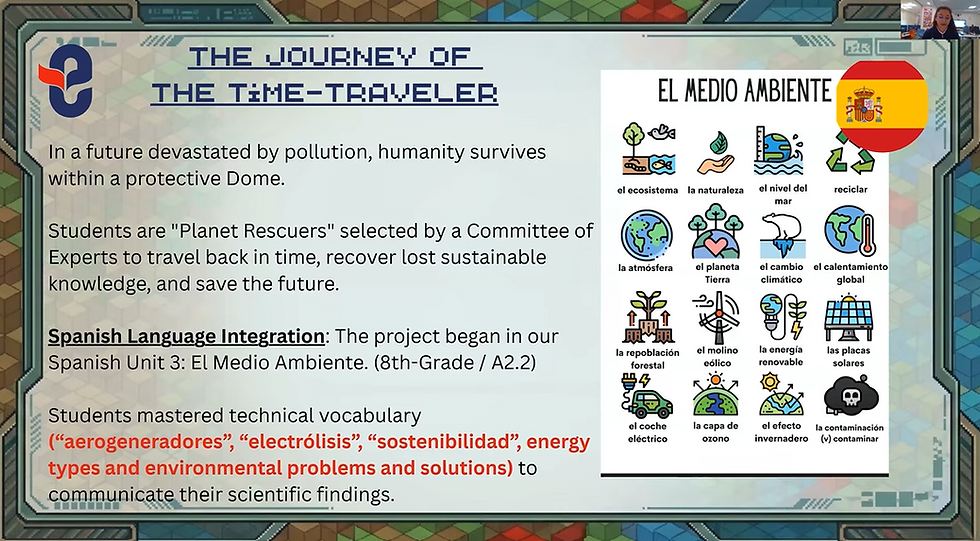
Türkiye: A group from Eyüboğlu Educational Institutions presented their interdisciplinary Spanish STEAM project titled “Planet Rescuers: Engineering a Sustainable Future through STEAM and Language Learning”. The team used Minecraft to engineer offshore wind turbines and used Redstone and MakeCode coding to simulate Green Hydrogen production, showcasing a unique fusion of language acquisition and technical literacy to drive innovative, youth-led climate action. A second group from Uğur Schools also presented their experience with Minecraft Planet Rescuers designing sustainable cities.
Lebanon: A group from Hayat International school, Lebanon presented their project called “The Science Behind It All: Minecraft and Sustainability”, which centred on designing sustainable cities in Minecraft, focusing on SDG 7 Affordable and Clean Energy.
India: A group from Delhi Public School, Lava, Nagpur presented their experience with SDG 7 Siemens Minecraft Activity, Planet Rescuers, and SDG 7-focused collaboration with the Energy Swaraj Portal in addition to their energy-conservation projects in local communities.
China: Boyu Frank Zhao from Kids for SDGs presented his project titled “Ecovolver”, a youth-led enterprise with the mission to spread awareness regarding climate change, depletion of fossil fuels, and renewable energy, and encourage action towards developing sustainable energy solutions.

Ecovolver Nigeria: A group from Sparkwise Academy presented their project titled “Youth-Led Solar Innovation: Transforming Waste into Clean Energy Solutions for Underserved Communities”, highlighting how students are using recycled materials to design simple solar-powered devices like a Waste-to-solar lantern, promoting clean energy access while addressing environmental sustainability and youth empowerment.
Saudi Arabia: A group from Dar Jana International school presented a project titled “From Trash to Power: Turning Waste into Clean Energy” in which students explored how organic waste can be converted into renewable energy sources such as biogas, highlighting the role of microorganisms in this process. A second group from Dar Al Fikr Schools, presented their “Aqua Smart Functional Dam” project which integrated hydropower, water purification, and smart irrigation.

From Trash to Power: Turning Waste into Clean Energy
UAE: A student group from Applied Technology Schools Ajman conducted a prototype demonstration of their solution called “AquaLume”, a smart, eco-friendly building system that uses solar power, sensors, and AI to monitor and optimize electricity and water use in real time. Through a mobile app, users can track consumption, receive alerts, and get personalized tips to reduce waste. By combining clean energy with intelligent automation, it lowers costs and makes sustainable living easier and more efficient.

AquaLume
Key recommendations for action:
Use innovative tools like Minecraft to engage younger students in order to train them to think sustainably and design sustainable solutions for contemporary energy crises.
Engage and collaborate with local communities beyond the school in the execution and implementation of sustainability initiatives to increase impact.
Integrate AI automation into sustainable technology to lower costs and optimize design.
Encourage community-ownership and locally-built low-cost solutions to decrease dependence on grants over time.
Upcycle and recycle environmentally harmful materials like plastic and electronic parts to design affordable energy solutions.


