


Student voices for peace at Central Model School Khanewal, Pakistan.

Written by Abigail Chifusa, Global Schools Project Officer.

At Central Model School Khanewal in Pakistan, peace is no longer just a word students come across in textbooks, it is something they are now learning to practice, share, and lead.
Muhammad Nadeem Akhtar, a Global Schools advocate and teacher at the school, has played a big role in supporting the institution’s efforts, showing how student voices, especially girls’ leadership, can make a huge impact in shaping global citizenship and peace education.
At a time when the world is facing increasing conflict, division, and misunderstanding, the school made a conscious decision to respond differently. Instead of allowing children to absorb messages of hostility or fear, teachers and students at Central Model School worked together to design a student-led peace education initiative grounded in humanity, respect, empathy, and shared values. The goal was to educate children for peace, not for war stories or hatred.
What makes this initiative stand out is that students were the leaders. Girls, in particular, stepped forward with confidence and creativity.
They planned and delivered peace-focused morning assemblies, speaking about kindness, unity, and the importance of understanding one another. They created posters filled with symbols of hope, white doves, joined hands, and colorful globes representing unity across continents. Their handwritten messages carried statements such as “No War,” “We Are One,” and “Peace Begins With Me.” These were reflections of how students see the world and how they hope it can be.

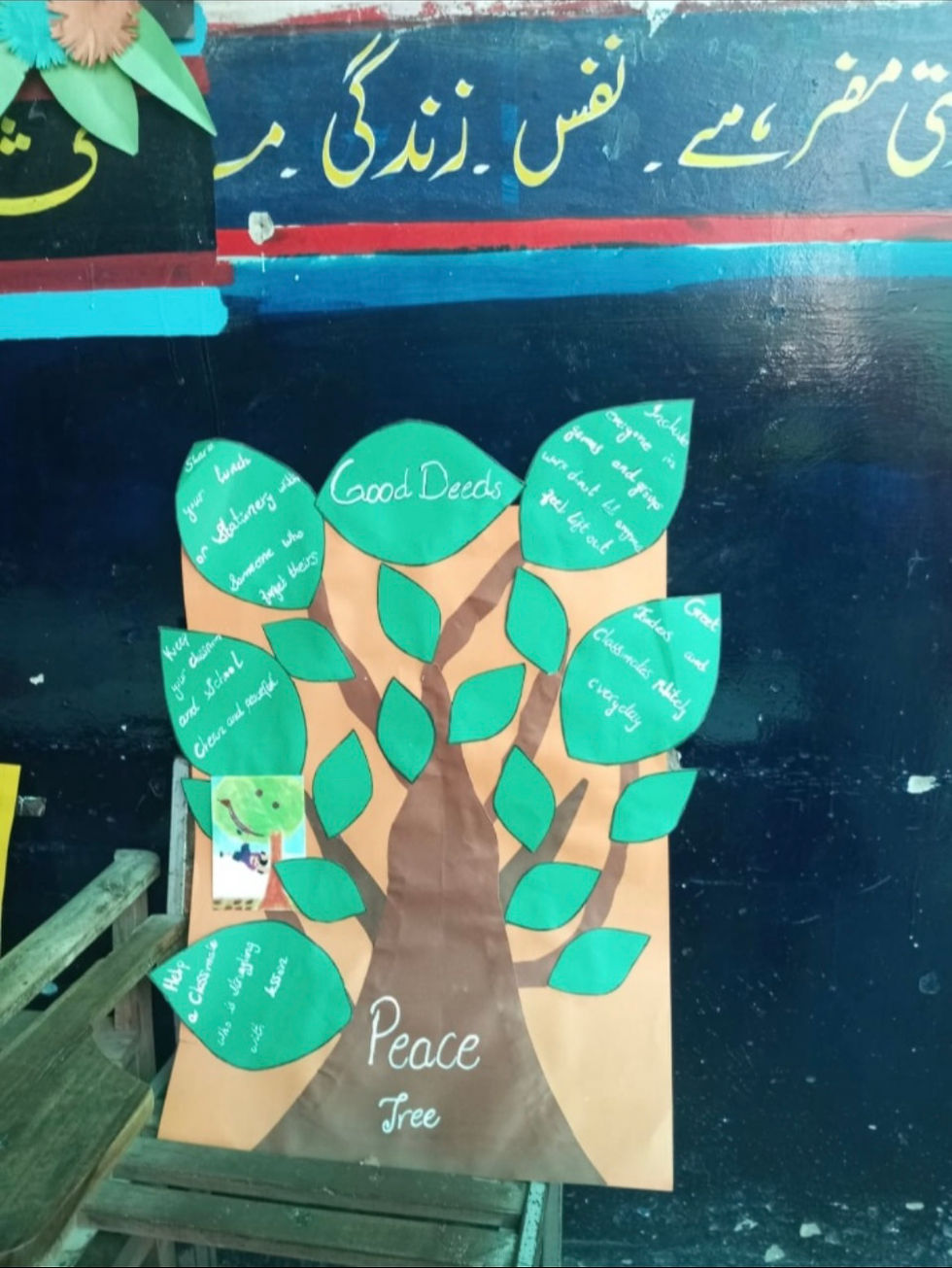
The assemblies at Central Model School became moments of awareness for the entire school community. They gave a platform for students to speak about resolving conflicts through dialogue. The learners also reminded one another that respect begins in small daily actions such as how they treat classmates, teachers, and even those who think differently. Through these activities, peace education became a lived experience.

The initiative championed by Muhammad and other teachers reached a deeper level of impact when it extended outside their school. Students sent peace messages by post to partner schools in different countries. Well prepared envelopes carried posters, drawings, and heartfelt notes across borders. In return, partner schools responded with their own peace messages and artwork. What started as a local activity grew into a global exchange of empathy and friendship.


For many students, receiving letters from other children in other countries helped them realize that young people everywhere share similar dreams of wanting to feel safe, valued, and hopeful about the future. Despite differences in language, culture, or geography, the desire for peace is universal. This exchange allowed students to see global citizenship as an abstract concept as well as a real connection between people.
This initiative advances Sustainable Development Goal (SDG) number 4 (Quality Education) by promoting values-based and experiential learning. Students read about peace and practiced it, expressed it, and shared it. It also supports SDG 5 (Gender Equality) by placing girls at the center of leadership and decision-making. Watching girls confidently lead assemblies and coordinate international exchanges strengthened the message that empowering girls improves communities and contributes to sustainable peacebuilding.
Further, the initiative also aligns with SDG 16 (Peace, Justice and Strong Institutions) by encouraging dialogue, empathy, and coexistence at a young age.
The project was supported by evidence of impact including photographs which captured students holding their peace posters. Video recordings also show girls confidently delivering messages during assemblies. International responses from partner schools showed that the exchange was meaningful and reciprocal.
This experience reaffirmed a belief within the Central Model School community that peace is a human value, not a political concept. When children are given the opportunity to lead, they often choose compassion over conflict. When girls are empowered to speak and organize, they become strong ambassadors of harmony and understanding.


